
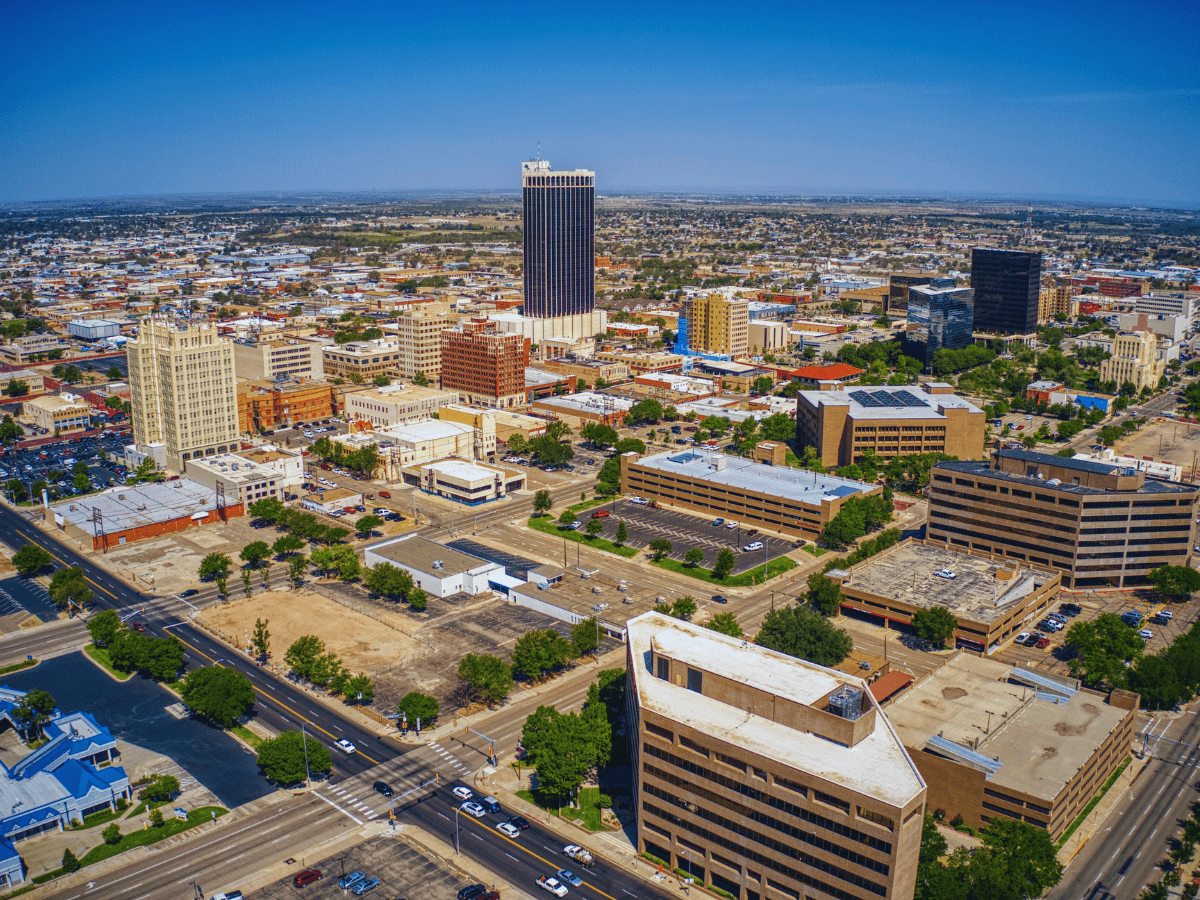
Amarillo residents urged city leaders at the Sept. 23 meeting to slow down and speak more openly about any potential water agreement tied to Fermi America’s proposed AI data and energy campus, warning it could reshape regional water supplies, power costs, and agriculture for decades.
The project’s massive data center could use millions of gallons of water every day to cool servers — enough to supply a town of 10,000 to 50,000 people, according to a 2024 University of California, Riverside study. Fermi’s planned nuclear reactors would require far less water, about 16.3 million gallons yearly, based on its June 2025 application to the Nuclear Regulatory Commission, but the company has not disclosed exact needs for the data center’s cooling operations despite pledging to recycle much of the water.
Nationwide, data centers consumed about 17.5 billion gallons of water in 2023, not including power-plant needs, and that demand could double or triple by 2028 as artificial-intelligence computing expands, the International Energy Agency and the U.S. Energy Information Administration project.
Mayor: No action taken, Fermi not involved in meetings
Mayor Cole Stanley said after the meeting that no Fermi representatives attended either the public meeting or the earlier closed executive session and that the council still lacks enough information to evaluate potential water impacts.
“Fermi was not part of our meeting today. They weren’t on the agenda,” Stanley said. “It’s a big deal and exciting, but it brings a lot of questions — and right now we don’t know enough to talk about the potential impact on our water resources. We needed to discuss safeguards to protect Amarillo’s most valuable resource, which is our water.”
The Sept. 23 executive session agenda listed only legal consultation on potential water-supply contracts and economic-development negotiations under the Texas Open Meetings Act. City officials said the session was for internal legal guidance and involved no negotiations or commitments.
Stanley urged residents to give the company time to share more details. “Fermi needs to keep educating the public about these questions,” he said. “As citizens, we should give them that chance.”
Big power plans, bigger cost worries
Fermi plans to generate its own electricity — starting with 600 megawatts from gas turbines and scaling to 11 gigawatts by 2038 — to limit stress on the grid. But similar projects have driven up consumer bills elsewhere. U.S. household electric rates have climbed more than 30% since 2020, according to a 2025 Consumer Energy Alliance report.
In the PJM power region, which serves parts of 13 states including Washington, D.C., data-center growth added $9.3 billion in costs and raised D.C. bills about $21 a month, PJM’s 2025 auction data show. A 2025 Duke Energy forecast warns that North Carolina customers could see 8% higher bills by 2030 for the same reason.
Protest organizer: ‘We’re being bounced around’
Outside City Hall, Kendra Harper, a Potter County resident and Women’s March organizer, said she first learned of the Fermi project through newspaper reports rather than direct outreach. She led a protest over AI data centers Sept. 20 outside the Potter County Courthouse and later addressed the council.
“My concern is that the announcement came from the newspaper, not community outreach,” Harper said. “Do our leaders have the answers they need for a deal this big? How much will it affect our water? Could it pollute? What does it mean for the Ogallala Aquifer, agriculture, our electric grid and ratepayers?”
Harper said she spent months seeking answers, emailing Amarillo council members who pointed her to Carson County, only to have county officials redirect her back to Amarillo because water rights fall under the city’s jurisdiction.
“It feels like we’re being bounced around while this huge project moves forward,” she said. “Everywhere I’ve researched, data centers raise utility rates for regular people. I haven’t found a case where economic growth outweighed resource shortages. Locals face higher bills, water stress and air-quality issues while companies get subsidies.”
Her concerns deepened after studying Westinghouse AP1000 reactors in Georgia, similar to Fermi’s plan. “They said most of the water would be recycled,” she said, “but we need clear details on fresh-water needs.”
Although Fermi’s air-cooled reactors would require only about 16.3 million gallons yearly, cooling the data center could demand millions of gallons each day, especially in the dry Panhandle — one of many U.S. regions where new data centers are being built despite chronic water scarcity, according to a 2024 Pacific Institute study.
Beyond water, Harper views the AI data component as a privacy threat. “It’s data brokering — it’s not for us, it’s to harm us,” she said. “There’s no scenario where billionaires take our resources and it benefits regular people.”
Harper said she invited Fermi, local officials and outside experts to a citizen-organized town hall, but most declined or did not respond. “It’s frustrating when those controlling our water won’t talk,” she said. “If they promise thousands of jobs and recycled water, how do we hold them accountable if it fails? We need binding agreements, not just rosy numbers.”
Residents call for binding protections
Several other speakers echoed Harper’s concerns during public comment at the council meeting.
- Jerry Ross of Randall County warned against “another deal favoring big corporations,” saying voters deserve a say before the city parts with water or risks higher bills.
- Josiah West asked which Carson County wells the city controls, how much groundwater might be leased and whether permanent jobs would go to locals.
- Mike Fisher challenged long-standing claims of a 300-year water supply and proposed trigger mechanisms to force Fermi to reduce use if aquifer levels fall. He cited Google’s 2024 environmental report noting a single Iowa data center used 1 billion gallons of water in one year, enough to supply every household in the state for five days.
Others demanded independent environmental reviews, public negotiations and strict caps on withdrawals. The U.S. Bureau of Labor Statistics reports that national household electric bills rose 6.5% from May 2024 to May 2025, with data centers identified as a major driver in high-growth markets such as Virginia.
Next steps
Stanley said he has spoken with former Mayor Trent Sisemore and has met members of Fermi’s team previously, but confirmed that no Fermi officials attended Tuesday’s sessions. He explained that the closed meeting earlier in the day was strictly to receive legal guidance on water rights and potential contractual safeguards.
“No action was taken and nothing today obligates the city in any way,” Stanley said, adding that the council’s goal was to identify protections for Amarillo’s water supply before any formal proposal arrives. He stressed that negotiations involving contracts must remain private until there is something concrete to share, but pledged that the public will be kept informed at every stage where open discussion is allowed.
Stanley offered no timeline for future votes or negotiations, saying the city is still gathering information and that any next steps depend on Fermi providing more details about its water and power needs.
Why this matters
- Amarillo sits atop the Ogallala Aquifer, a critical but declining water source for the Texas Panhandle.
- The Fermi campus would combine AI data centers and nuclear power, a first-of-its-kind project with little precedent for resource impacts.
- Local leaders say no agreement is imminent, but residents argue that once water rights are committed, there may be no turning back.