
If some legislators get their way, every driver in Minnesota will be paying much more for gas, diesel, and home heating that fuels their day-to-day lives...

Protect Your Pocket

Two pieces of legislation, a Low Carbon Fuel Standard (LCFS) and a Climate Superfund, are moving through the Minnesota Legislature. Together, they could dramatically raise the cost of gas, diesel, and home heating for every Minnesota family.

The Greenhouse Gas Pollution Superfund Act, SF 4126 and The Clean Transportation Standard, HF 2847, are more than just policies – they’re a direct threat to your financial stability. Designed to appear focused on environmental protection, it will actually increase your daily expenses, restrict your transportation options, and impose unfair burdens on our most vulnerable communities without actually improving the environment they are hoping to protect.

There are those who will argue that this will not be passed on to Minnesota consumers, but that is fiction. Energy costs are baked into every product we buy and every service we use. This expensive new tax will be passed through to every one of us when we fill our gas tanks, recharge our electric cars, heat our homes and switch on a light.

Two Bills. One Major Impact on Your Wallet.

Minnesota legislators are advancing two significant proposals that, individually or in combination, would increase what you pay for gasoline, diesel, and home heating. Here’s what each one does and why they matter.

HF 2847 – Clean Transportation Standard

This bill would impose a LCFS on every gallon of fuel sold in Minnesota, requiring fuel suppliers to reduce the “carbon intensity” of their products on an escalating schedule from 2026 through 2050.

Suppliers that cannot meet the targets must purchase expensive compliance credits whose costs are passed directly to consumers at the pump.

The same policy framework in California caused gasoline prices to rise by over $0.52 per gallon and diesel by over $0.66 per gallon, according to a California Air Resources Board (CARB) analysis. Minnesota consumers would face a similar, and potentially worse pricing impact.
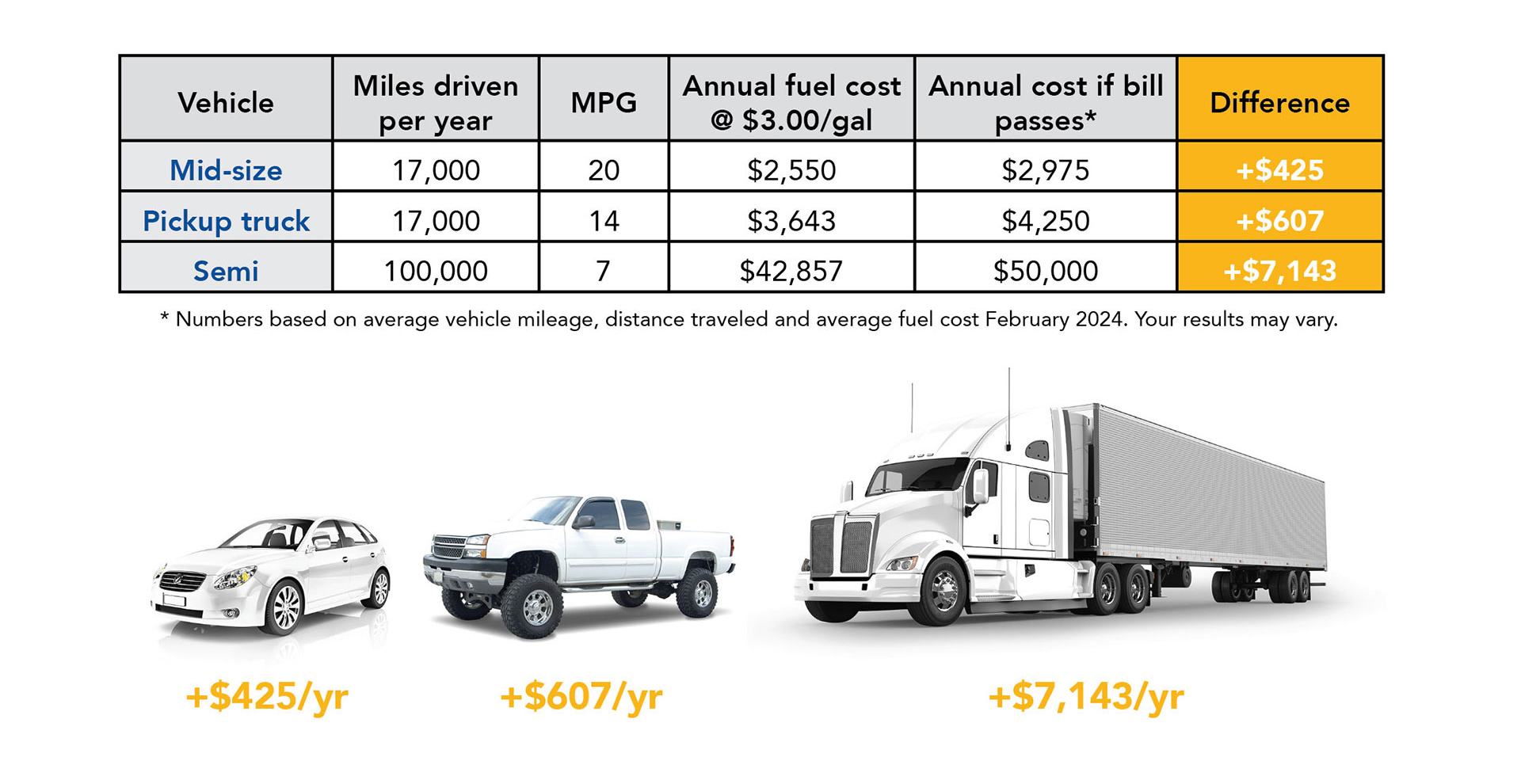
The impact to you if fuel costs rise $.50/gal:

The Clean Transportation Standard in HF 2847, is more than just a policy – it directly threatens your financial stability. Designed to appear focused on environmental protection, it will actually increase your daily expenses, restrict your transportation options, and impose unfair burdens on our most vulnerable communities.

Add in the pass-through costs from SF 4126’s Superfund fees, and the combined impact on household budgets is severe.

SF 4126 — Minnesota Climate Superfund Act

Modeled on legislation that passed in Vermont and New York, the Minnesota Climate Superfund would levy billions of dollars in retroactive fees on large oil, gas, and coal companies based on their historic greenhouse gas emissions. 

Framed as “polluter pays” when in actuality, it’s the consumer who will be hit hardest as the fees flow directly downstream through higher prices at the pump and on your home energy bill.

These Policies Don't Hurt Everyone Equally

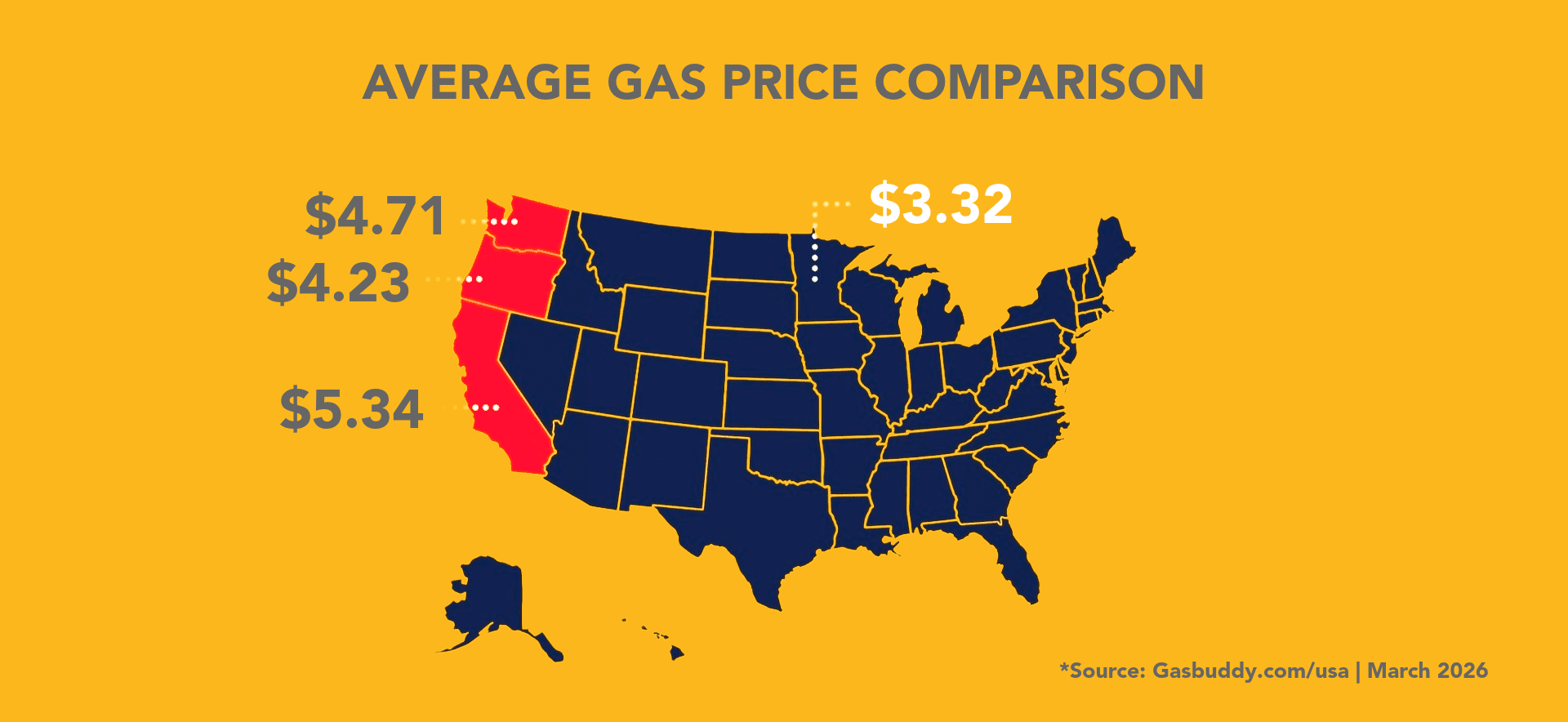
Minnesotans have enjoyed some of the lowest gas prices compared to other households in the U.S., but this policies like those in HF 2847 and SF 4126 threatens to undo this, escalating the average cost that Minnesota households spend on gas, pushing the state down the path of others like California, Oregon, and Washington, where fuel prices are among the highest in the nation due to similar policies.

Why should Minnesotans bear the burden of a policy that makes life more expensive for everyone?

Low-Income Families

Families already stretching their budgets will see fuel expenses consume 10% or more of household income. Unlike wealthier households, they cannot absorb fuel price hikes by switching to EVs or working from home. Every extra dollar at the pump is a dollar taken from food, rent, or healthcare.

Rural Minnesotans

Rural communities drive more miles for basic daily needs when it comes to work, school, healthcare, and groceries. There is no public transit alternative. They depend on diesel-powered equipment for farming. For rural Minnesotans, these policies are not just an inconvenience, they are a direct tax on the cost of living in their communities

Small Business Owners

Minnesota’s small businesses’ delivery services, contractors, food distributors, landscapers all run on fuel. Higher mandated fuel costs cannot be easily absorbed. They will be forced to raise prices, reduce staff, or both. The economic ripple effect harms every community they serve.

Homeowners on Fixed Incomes

Seniors and others on fixed incomes who heat their homes with natural gas will face higher bills driven by Superfund fee pass-throughs. Minnesota winters are brutal and home heating is not optional. These cost increases impose a disproportionate burden on older Minnesotans with no ability to increase their income.

Take Action Now!

Your voice matters. Opposing the Clean Transportation Standard in HF 2847 and Greenhouse Gas Pollution Superfund Act in SF 4126 isn’t just about fighting higher costs; it’s about standing up for fairness, equity, and the right to choose what’s best for you and your family. Join us in calling on our legislators to STOP SF 4126 and HF 2847.

Urgent Action Needed! Stand Up and Oppose a Hidden Gas Tax Today!

Your voice matters. Opposing the Opposing the Clean Transportation Standard in HF 2847 and the Greenhouse Gas Pollution Superfund Act in SF 4126 isn’t just about saying no to higher costs; it’s about standing up for fairness, equity, and the right to choose what’s best for you and your family.

Join us in calling on our legislators to STOP the hidden tax on consumers.

Join us in support of Energy Affordability, Reliability & Cleaner Energy Solutions