Energy education
Join Consumer Energy Alliance
Consumer Energy Alliance advocates for affordable, reliable, and safe energy policies that support a variety of energy consumers across the country. From families to businesses large and small, we’re the voice of the energy consumer.
Join the effort
Sign up and join hundreds of thousands of Americans who have signed up to help CEA advocate for commonsense, balanced, energy policies.
Policymakers, Join Us by Supporting Bi-Partisan Energy Policy
Join Consumer Energy Alliance as it continues to advocate for bi-partisan energy solutions that help to provide businesses, farmers, and families with affordable, reliable energy while maintaining our environment.
If some legislators get their way, every driver in Minnesota will be paying much more for gas soon...
Say NO to a $0.50 gas increase!
Protect Your Pocket
The Clean Transportation Standard, is more than just a policy—it directly threatens your financial stability. Designed to appear focused on environmental protection, it will actually increase your daily expenses, restrict your transportation options, and impose unfair burdens on our most vulnerable communities.
The Hidden Costs of The Clean Transportation Standard: A Tax on Every Gallon You Buy
An independent analysis shows that this policy could increase fuel prices significantly, hitting hardest those who can least afford it. Imagine paying an extra $0.50 or more for every gallon when you fill up your tank. Low-income families, who already spend a larger share of their income on transportation, could see their fuel expenses surge, consuming over 10% of their household budget. This isn’t just a policy—it’s a penalty on your way of life.
In fact, the California policy this is modeled on was analyzed by the California Air Resources Board (CARB) last year. CARB determined California policies could cause gas prices to increase $0.52 and diesel to increase $0.66 next year.
Unfair and Unequal Impact
A Clean Transportation Standard doesn’t affect everyone equally. It disproportionately impacts those living in rural areas who depend on their vehicles for daily tasks and lack alternative transportation options. It’s not just about paying more at the pump; it’s about the fundamental fairness of a policy that benefits a few at the expense of many.
A $0.50 increase for every gallon of gas would cause the share of household income devoted to fuel expenses to surpass 10% of all other household spending. For families struggling to make ends meet, this additional cost could mean cutting back on other essentials such as food, healthcare, or housing.
This policy would make the economic challenges for low-income families in urban areas even worse. This is why it is crucial to consider equitable solutions that address these disparities and consider everyone in our community, especially those who can least afford it, while we continue to pursue our environmental goals.
Take Action Now!
Your voice matters. Opposing the Clean Transportation Standard isn’t just about fighting higher costs; it’s about standing up for fairness, equity, and the right to choose what’s best for you and your family. Join us in calling on our legislators to STOP the $0.50 a gallon increase.
Urgent Action Needed! Stand Up
and Oppose a Hidden Gas Tax Today!
Your voice matters. Opposing a Clean Transportation Standard isn’t just about saying no to higher costs; it’s about standing up for fairness, equity, and the right to choose what’s best for you and your family. Join us in calling on our legislators to STOP the $0.50 per gallon hidden tax increase.
Sign our petition, share your story, and ensure that Minnesota remains a place where policies work for the people, not against them.
STAY UPDATED!
Sign Up for Updates
Electric Issues in Your State
How politics impacts electric bills
undestanding different utility markets
solar power and you
It's Electric!
The electricity system is incredibly complex because it involves generating power from various sources like coal, natural gas, nuclear, wind, and solar, then transmitting this power over vast distances through a network of high-voltage lines, and finally distributing it to homes and businesses at safe, usable voltages so we can power our refrigerator, air conditioner, and cell phones.
Understanding these complexities is vital for making informed decisions as consumers and voters. By learning how electricity is produced, transmitted, and consumed, we can advocate for rules and laws that ensure the grid remains reliable and resilient against failures. Additionally, this knowledge helps us support policies that promote affordability and sustainability, balancing the need for economic efficiency with environmental and social responsibility.
ABOUT THE CAR BAN
Today, Delaware drivers can shop around and pick the car that fits their lifestyle and their budget—but not for long.
Policymakers in Dover are pushing to ban gas-powered cars this year by finalizing a new regulation requiring the sale of only electric vehicles (EVs) by 2035. This government overhaul of the automotive market could be catastrophic for families and businesses.
Delawareans do not want it. Many cannot afford it. And the state’s EV infrastructure and electric grid are not prepared for it.
We are working to raise awareness among Delawareans so they encourage their state elected officials to pump the brakes on the reckless car ban and consider the damaging consequences for Delawareans.
OUR REPORT
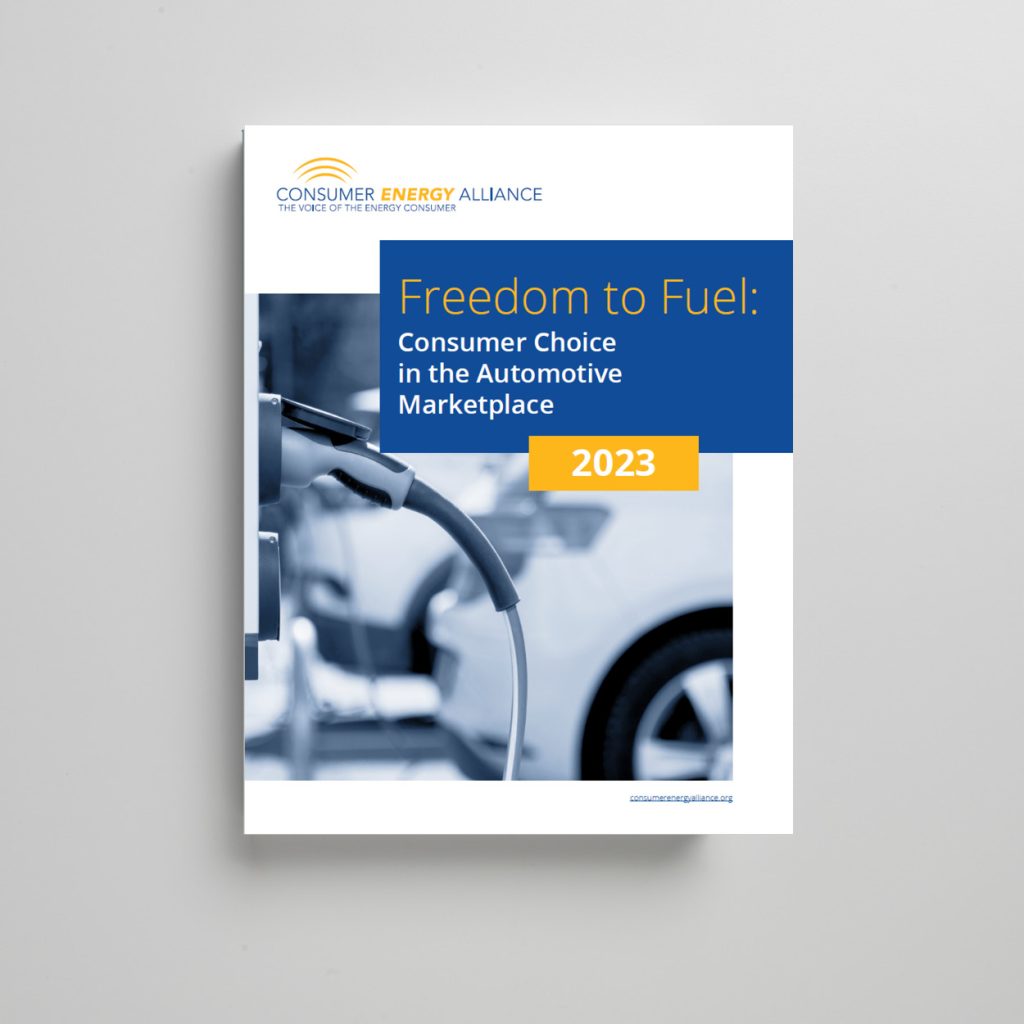
Too often, the consumer is completely left out of policy conversations, and that is certainly what we’re seeing in several states where policymakers are rushing ahead with proposals requiring the market to adopt electric vehicles. State elected officials are pushing these policies without regard to the real-world implications these mandates will have on consumers, grid reliability, or the economy.
Our report, “Electric Vehicle Mandates Carry Major Price, Electricity Supply Risks That Must Be Addressed to Avert Potential Harm,” describes the unintended consequences as state policymakers rush to ban gasoline and diesel-powered vehicles, forcing consumers to purchase EVs before they have the requisite infrastructure.
To view the national report, click here, or to view our national press release, click here.
For information on Delaware, click here.
hydro in our state
In 2019, Washington had the fourth-lowest average electricity retail prices in the nation, in large part due to hydropower generation.
The Grand Coulee Dam on Washington’s Columbia River is the largest power plant by generation capacity in the United States.
Washington generated the most electricity from hydropower of any state in 2019.
The Grand Coulee Dam is the seventh-largest hydropower plant in the world – providing 4.2 million households with electricity.